Securing an authoritative pest control service in Laurel protects structural framing, electrical wiring, and interior living environments from destructive wood-boring insects, disease-vector rodents, and persistent seasonal arthropods. Property owners searching for dependable pest control near me across the Patuxent River basin encounter unique soil moisture dynamics, dense deciduous canopies, and mixed architectural construction that demand disciplined Integrated Pest Management rather than indiscriminate chemical saturation.

Pest Control Service in Laurel is a specialized structural sanitation and biological management service that identifies, eliminates, and blocks wood-destroying insects, rodents, and nuisance pests from residential and commercial properties.
Every service reflects the same meticulous attention to detail — whether it's a single job or a larger pest control service project across Laurel.
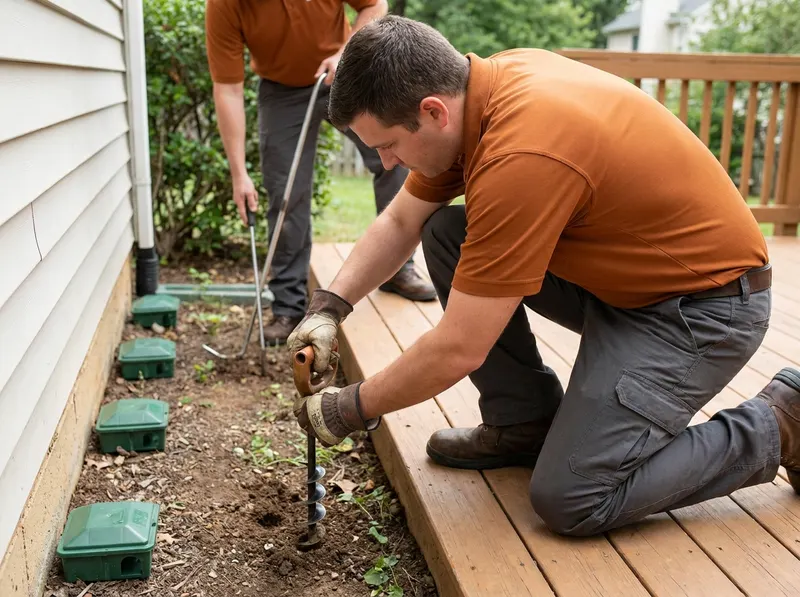
Eastern subterranean termites cause severe structural impairment by consuming cellulose within sill plates, subflooring, wall studs, and support joists. Technicians install heavy-duty in-ground baiting stations spaced ten to fifteen feet apart around the exterior perimeter, charged with chitin synthesis inhibitors that foraging worker termites distribute throughout the subterranean colony. When subterranean termites penetrate crawlspace footings or slab expansion joints, technicians apply targeted, non-repellent liquid termiticides into perimeter trenches and drill holes, creating an undetectable lethal transfer zone that stops active wood destruction without pushing colonies deeper into concealed structural voids.
View details →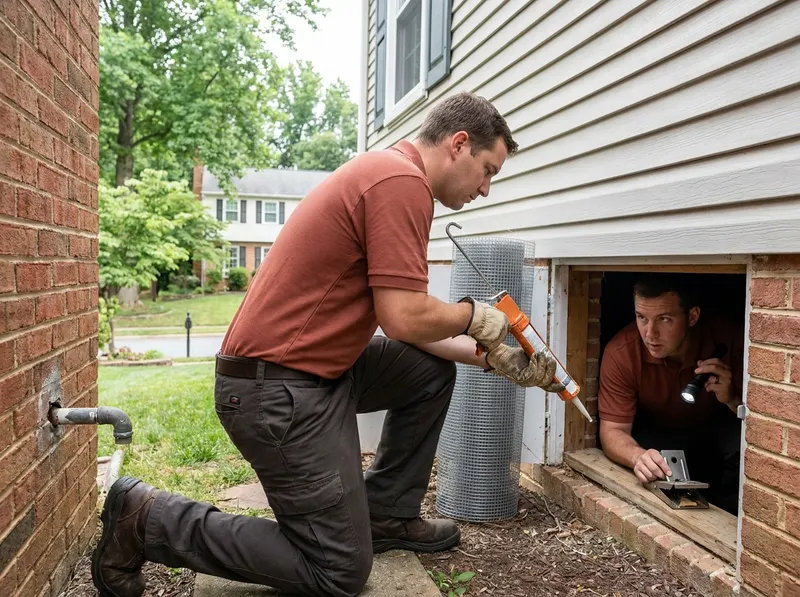
Norway rats, roof rats, and house mice exploit structural openings as narrow as one-quarter of an inch to enter crawlspaces, wall cavities, and attic insulation. Rodents gnaw on thermoplastic electrical wiring, contaminate ductwork with urine and droppings, and introduce secondary ectoparasites. Technicians conduct systematic structural audits of roof eaves, gable vents, air conditioning chase lines, crawlspace access covers, and garage door weatherstripping. Technicians permanently seal all perimeter apertures using corrosion-resistant galvanized hardware cloth, expanding high-density foam, copper mesh, and heavy architectural caulking, while deploying tamper-resistant mechanical snap-traps within interior runways to extract resident populations quickly.
View details →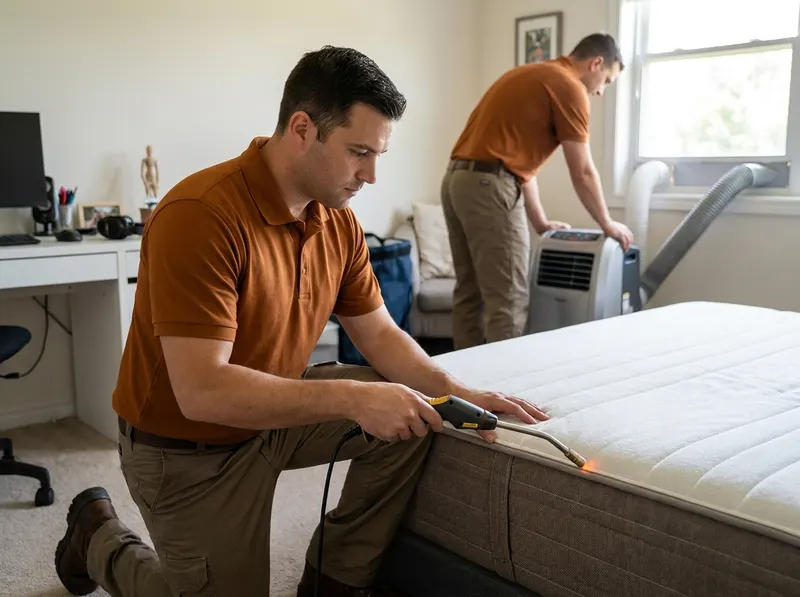
Bed bugs harbor within mattress tufts, headboard joints, electrical baseboards, and hardwood floor seams, emerging during darkness to feed on human blood. Remediation begins with a comprehensive forensic inspection using LED illumination and optical magnification to identify nymphs, adults, cast skins, and fecal spots. Remediation protocols utilize high-output industrial heaters to elevate ambient room temperatures above 122 degrees Fahrenheit—the thermal death point for all bed bug life stages including eggs—or deploy precision localized non-repellent residual liquids and amorphous silica dusts into wall voids, eliminating harborages without contaminating domestic air supplies or food preparation zones.
View details →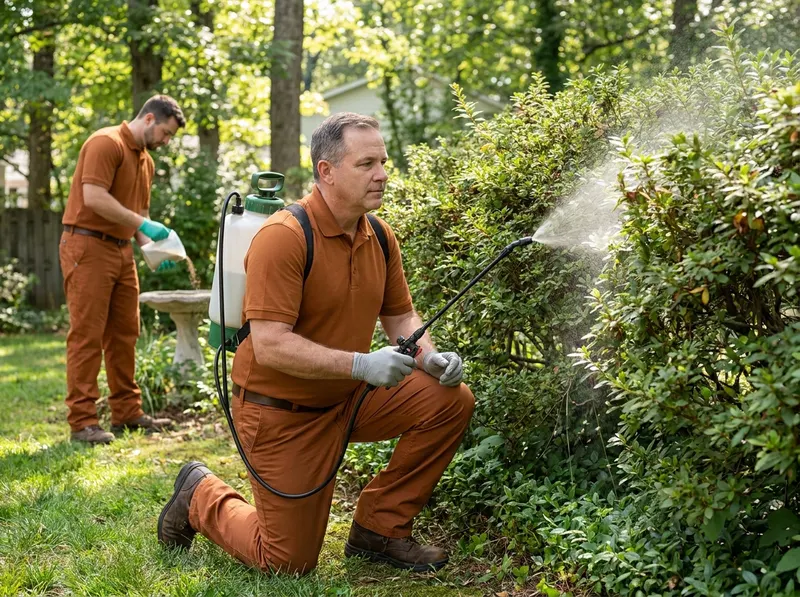
Stagnant water, dense ornamental shrubs, and hardwood tree lines sustain heavy populations of Asian tiger mosquitoes and Culex species capable of transmitting pathogens like West Nile virus. Management programs begin with comprehensive property source-reduction audits to uncover micro-breeding habitats in gutter systems, birdbaths, drainage basins, and low-lying turf. Technicians utilize backpack misting equipment to apply microencapsulated adulticides to the shaded undersides of broadleaf plants, perimeter hedges, and tree canopies where adult mosquitoes rest, while introducing bacterial biological larvicides into standing water reserves to eliminate larvae before adult emergence.
View details →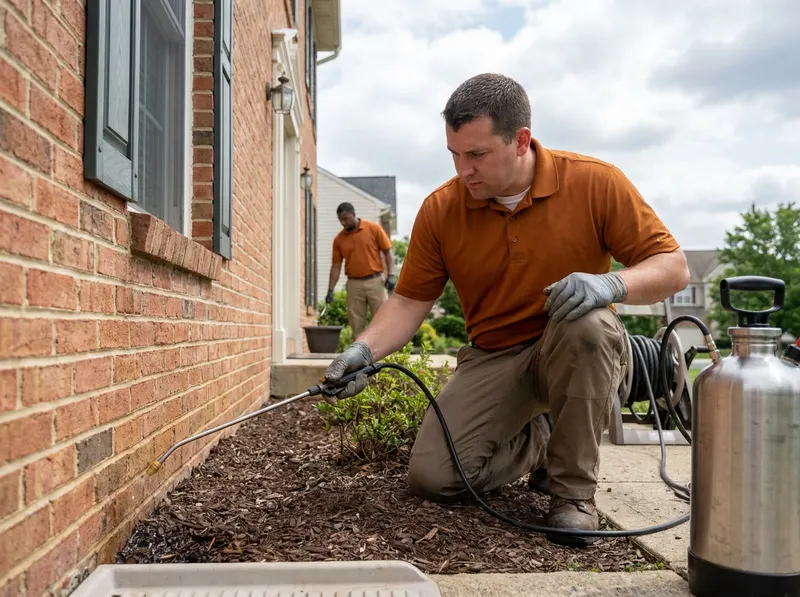
Pavement ants, carpenter ants, German and American cockroaches, wolf spiders, centipedes, and camel crickets enter residential interiors when outdoor temperatures shift or heavy precipitation saturates soil. Technicians apply a three-foot vertical foundation barrier and a six-foot horizontal perimeter band using microencapsulated, weather-resistant formulations that bond directly to brick, poured concrete, and decorative vinyl siding. Technicians treat exterior door thresholds, basement window wells, weep screeds, and plumbing entries, preventing crawling arthropods from establishing interior breeding colonies while minimizing indoor chemical footprints.
View details →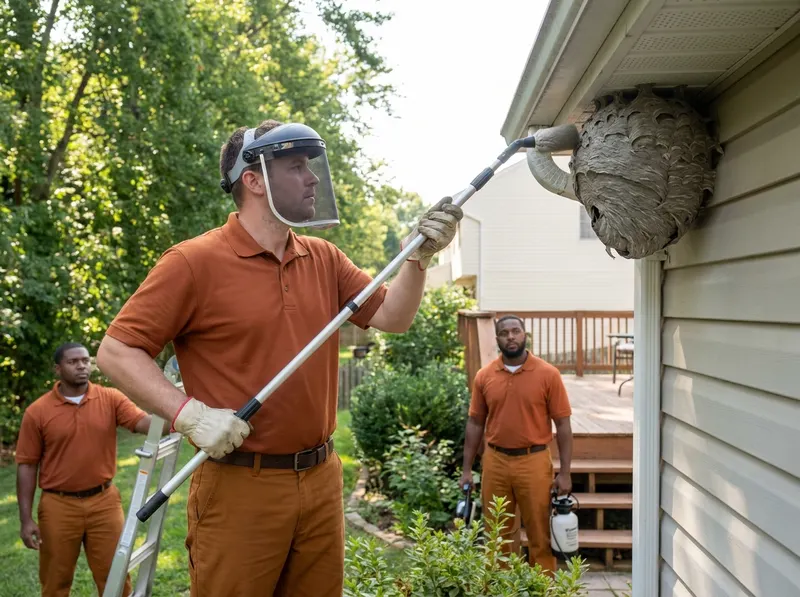
Yellowjackets, bald-faced hornets, paper wasps, and European hornets build defensive paper nests beneath roof soffits, inside hollow porch columns, in dense ornamental hedges, and within subterranean rodent burrows. Technicians wear protective sting suits to isolate and treat nest openings using fast-acting localized knockdown aerosols and pyrethroid dust formulations. Once stinging insect activity is completely suppressed, technicians physically detach and extract the nest structure from exterior surfaces, neutralizing residual pheromone markers and applying targeted residual barriers to discourage future colony establishment in the same structural recesses.
View details →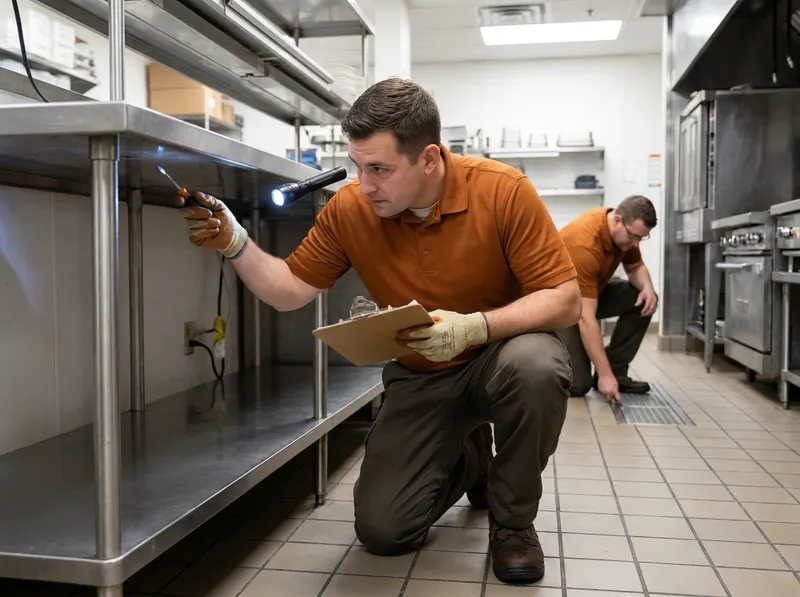
Commercial food preparation facilities, medical offices, warehouse distribution centers, and multi-family rental complexes must maintain strict compliance with municipal sanitation ordinances and state health safety regulations. Commercial management protocols include scheduled digital inspection logging, barcoded exterior bait station monitoring, insect light trap servicing, interior pheromone monitoring for stored-product pests, and targeted structural exclusion. Technicians provide detailed electronic documentation, trend analysis reports, and customized corrective action plans to ensure audit readiness and eliminate pest vulnerabilities in loading bays and mechanical utility rooms.
View details →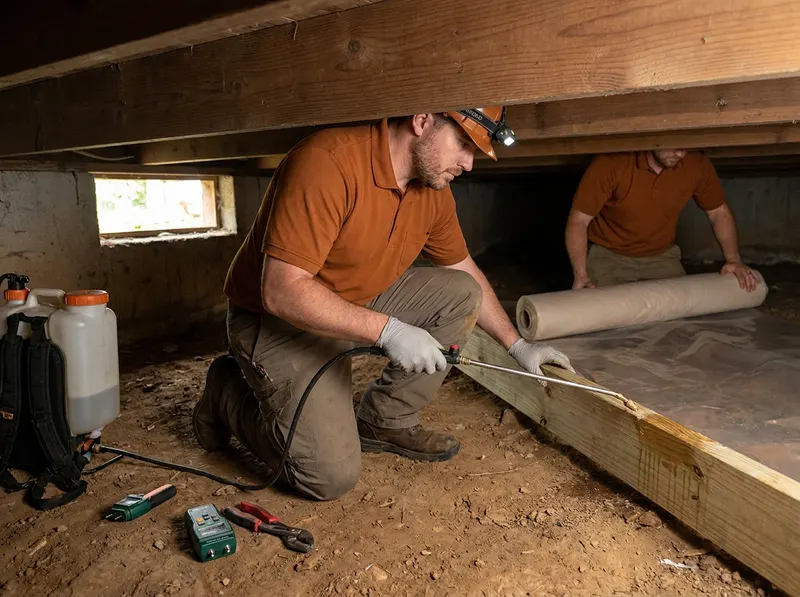
Elevated relative humidity in unconditioned crawlspaces softens structural framing and creates favorable environments for powderpost beetles, wood-decay fungi, and dampwood termites. Technicians inspect subfloor wood moisture content using electronic resistance meters, document structural wood rot, and identify active frass deposits from boring beetle larvae. Remediation involves applying targeted borate mineral solutions directly to raw dimensional framing timbers to penetrate the wood fiber, rendering it unpalatable and toxic to wood-destroying organisms, accompanied by recommendations for vapor barrier upgrades and ventilation corrections.
View details →Pest Control Service in Laurel is a specialized structural sanitation and biological management service that identifies, eliminates, and blocks wood-destroying insects, rodents, and nuisance pests from residential and commercial properties.
You get a firm, itemized quote for your pest control service before any work begins — no surprises, no pressure.
Careful prep, tidy work, and a full cleanup when we are done. We treat your home and belongings like our own.
The same trusted, background-checked team from the first call to the final check.
Selecting the proper structural defense protocol requires balancing pest colonization depth, immediate safety risks, building materials, and environmental longevity. If subterranean termites have initiated mud tubes along foundation masonry, choose a continuous subterranean bait station network; if active wood destruction is occurring in structural sills during a renovation, choose a localized liquid soil termiticide injection. The trade-off is long-term colony collapse over sixty to ninety days via insect growth regulators versus rapid chemical interception that requires continuous perimeter trenching, masonry drilling, and periodic soil reapplication. If commensal mice or Norway rats have penetrated attic insulation, choose whole-structure exterior exclusion paired with targeted interior mechanical trapping; if you are managing rodent pressure along an external commercial dumpster enclosure, choose exterior tamper-resistant rodenticide stations. The trade-off is higher upfront carpentry labor to inspect and seal every roofline junction, soffit gap, and crawlspace vent versus lower initial costs with recurring bait station replenishment that leaves structural vulnerabilities open. If bed bugs are confirmed across multiple upholstered items in sleeping zones, choose high-temperature thermal remediation paired with micro-particle desiccant dust in wall voids; if bed bug activity is strictly isolated to a single mattress seam, choose precision localized steam remediation and multi-layer mattress encasements. The trade-off is a higher initial capital investment for rapid whole-room thermal eradication in a single day versus lower initial expenditure that demands strict homeowner laundry discipline and multiple follow-up chemical visits over four to six weeks. If exterior perimeter ants and spiders invade living areas every spring, choose microencapsulated exterior foundation barrier sprays combined with granular yard treatments; if indoor food-handling surfaces show active foraging trails, choose targeted non-repellent gel baiting inside wall switch plates and cabinet recesses. The trade-off is wide-area preventative exterior interception that requires bi-monthly or quarterly renewal versus surgical interior bait transfer that takes seven to fourteen days to eliminate the parent nest.
Every project gets a firm, written price after a free on-site visit. Ranges below for orientation.
Tell us about your pest control service job and we'll send a clear, written quote — usually the same day. Or just call and talk to a real Laurel pro.
(240) 917-2719
Properties throughout Laurel experience severe biological pest pressures driven by the convergence of the Patuxent River basin, expansive deciduous woodlands surrounding the Patuxent Research Refuge, and a varied blend of mid-century and modern construction styles. In established historic and mid-century neighborhoods such as Montpelier and West Laurel, mature tree canopies, aging brick foundations, and high water tables create ideal subterranean moisture conditions for Eastern subterranean termite swarms, which routinely attack untreated sill plates and floor joists between late March and May. Meanwhile, master-planned developments in Russett, Emerson, Victoria Falls, and Maryland City frequently encounter heavy autumn rodent migrations; Norway rats and field mice move inward toward climate-controlled crawlspaces and attics as surrounding agricultural tracts and wooded river buffers turn cold. The localized water bodies around Granville Gude Park and Lakehouse, along with the retention ponds near Laurel Lakes Centre and commercial corridors along Route 1 (Baltimore Avenue) and Route 198 (Fort Meade Road), sustain elevated humidity levels that foster mosquito breeding from May through September. Technicians calibrate every remediation plan to these localized Prince George's, Anne Arundel, and Howard County border conditions, utilizing soil-specific termiticide applications and structural barrier engineering rather than standard, uncalibrated pesticide treatments.
Free estimates for Laurel & the surrounding area.
 Alveron Pest Control