Properties adjacent to the Patuxent River corridor and wooded tracts near the Patuxent Research Refuge face sustained Eastern subterranean termite pressure due to dense soil moisture and decaying forest biomass.…
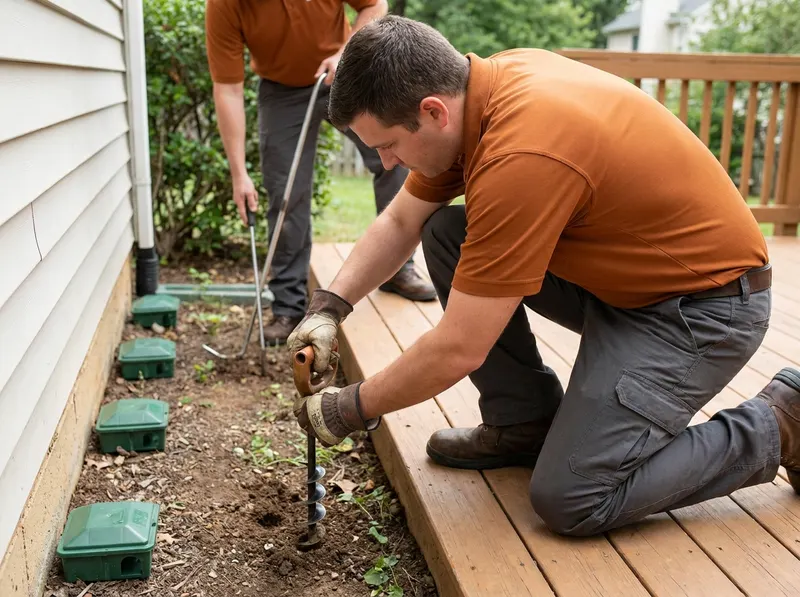
Properties adjacent to the Patuxent River corridor and wooded tracts near the Patuxent Research Refuge face sustained Eastern subterranean termite pressure due to dense soil moisture and decaying forest biomass. Neighborhoods like West Laurel, Montpelier, and Carriage Hill frequently feature mature tree canopies and older structural timber, while slab-foundation developments in Russett and Emerson remain vulnerable to subterranean entry through unseen expansion joints and utility conduits. Subterranean termite remediation provides proactive structural defense by targeting the soil reservoirs where Reticulitermes flavipes colonies originate, preventing workers from bridging ground-to-wood pathways unnoticed.
Direct liquid soil barriers establish an unbroken perimeter defense along foundation footings, whereas exterior baiting matrices offer continuous, low-impact monitoring around finished landscaping and patio perimeters. Liquid barriers deliver immediate perimeter isolation for active infestations discovered during interior renovations, while specialized bait systems intercept subterranean colonies over time without invasive foundation trenching. Every remediation program in Prince George's County avoids generic whole-house saturation, focusing termiticide applications precisely where structural risk and soil contact intersect.
Every job gets a firm, written price after a free on-site visit.
Tell us about your subterranean termite remediation & baiting job in Laurel and we'll send a clear, written quote — usually the same day.
 Alveron Pest Control